
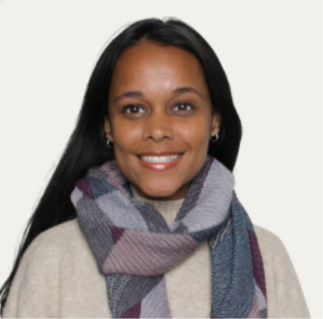
Freelance Communications
“Communications can be as powerful as it can be destructive…. The ideal is not simply to tell stories about communities, but wherever possible to create opportunities for people to tell their own stories.”
This interview was conducted by Thanti Octavianti, a CWiW volunteer on the Membership Spotlight team.
Empowering communities through creative methods and storytelling
Based in Stockholm, Sweden, Radhika Gupta is an environmental storyteller who previously worked as a communications manager at the Stockholm International Water Institute (SIWI). With a bachelor’s degree in design communication and a master’s degree in social-ecological resilience for sustainable development, she combines creative practice with an understanding of complex social and environmental systems.
Her interest in environmental communication began with a passion for wildlife in her home country, India. During her design studies in Singapore, she came to see communication as a tool for reaching different audiences and raising awareness on local issues. Over time, this evolved into a focus on storytelling and arts-based methods.
Water has also been an important thread in Radhika’s professional journey. During four years at SIWI, she was involved in encouraging investments in rain-fed agriculture across eight countries in the Zambezi basin of Africa. In addition to being a member of our community, she is also part of the Women in Water Diplomacy Network.
Before More Is Lost: putting community visions first
Her current work on Before More Is Lost further reinforces the interconnections among food, land, and water. By building relationships with an Indigenous community in Sikkim, India, in the Eastern Himalayas, the project aims to re-imagine traditional food futures in the region.
Sikkim is not a new place for Radhika. It is the focus of her master’s research, which identified a loss of food diversity and associated knowledge. When a village elder asked what the community would receive in return for contributing to research that would help her gain a master’s degree, the question stayed with her. Ten years later, in 2026, she returned to collaborate on responses that the communities themselves considered meaningful.
Within Before More Is Lost, she works with a youth-led organization called Yambong Ecotourism Committee. The initiative uses arts-based approaches to explore reviving food practices and facilitate exchanges between village elders and younger generations. Many of the young people involved have chosen to stay in, or return to, their villages after studying or working elsewhere, motivated by an interest in revitalizing traditional practices while creating local livelihood opportunities.
Why storytelling matters
The project’s creative methods emerge collaboratively rather than being predetermined. In one activity, Radhika invited community members to imagine what would happen if food supplied from outside their villages stopped. Participants initially reflected on how they might survive for one year before extending the scenario to five years. Through paintings, they explored future possibilities and considered what knowledge should be passed to younger generations.
The conversations continued beyond the workshop. Following discussions across five villages, each village committed to reviving a traditional crop, including millet, barley, buckwheat, black mustard, and wheat. The workshops were documented through a film made by a community youth who is a filmmaker and belongs to a yak herding family. The film first premiered at COP17 in Ulaanbaatar, Mongolia, in 2026 alongside the International Year of Rangelands and Pastoralists. The film’s trailer can be viewed here.
Radhika also makes an important distinction between institutional “stakeholders” and communities as “rights-holders”. Her long-term ambition is to support community-led visions, strengthen inter-generational knowledge-sharing, and create opportunities for younger generations to adapt inherited knowledge to contemporary challenges.
For Radhika, storytelling can make environmental issues more tangible and relatable. At the same time, she cautions that simplified narratives can erase the complexities surrounding environmental problems.
Leadership and responsible storytelling
This community-centered perspective also shapes Radhika’s understanding of leadership. For her, leadership is not simply about advancing one person’s vision; it is about helping to bring a collective vision to life. One of her most cherished mentors is Saori Ogura, a Japanese scholar who also conducted research in Sikkim. Saori shaped Radhika’s approach, guiding her in undertaking more ethical and community-centered work.
Radhika’s advice for people exploring environmental communication is to create communications responsibly, particularly in a digital environment where messages can travel far beyond their intended audience: “Communications can be as powerful as it can be destructive.” Information needs to be fact-checked, and stories involving communities must be co-developed carefully and with consent. She suggests, “the ideal is not simply to tell stories about communities, but wherever possible to create opportunities for people to tell their own stories.”