Environmental Management Consultant
Water–Energy Nexus Specialist
“Water is not only the source of life – it is life itself. Its interconnectedness with every aspect of society is what inspires me most.”
This interview was conducted by Salma Bessadok, a CWiW volunteer on the Member Spotlight team.
From Energy to Water: Hasmik’s Interdisciplinary Journey Toward Sustainability
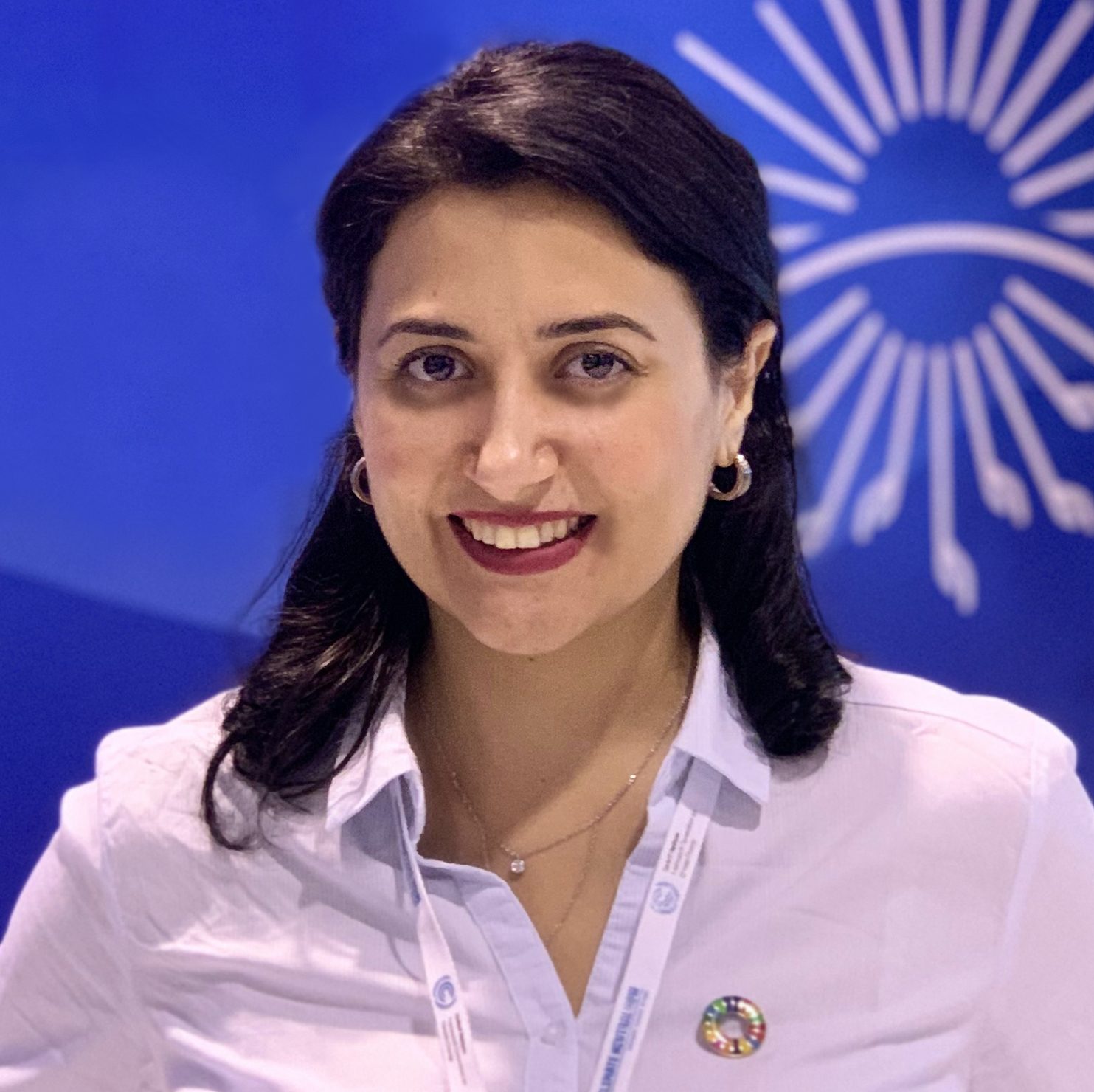
Hasmik’s professional journey reflects a strong commitment to sustainable development and interdisciplinary environmental management. Originally from Armenia and now based in Paris, she first studied linguistics before pursuing a master’s degree in Law, Economics, and Management. After beginning her career in public service and economic diplomacy, she later led a foundation dedicated to renewable energy development in Armenia, working on energy sector decarbonization.
This experience marked a turning point in her career, leading her to adopt a more systemic and holistic approach to sustainability. Seeking to deepen her expertise, she gained international experience in the United States and later specialized in environmental management and sustainable development strategies at TU Dresden in Germany. Through these experiences, Hasmik strengthened her conviction that today’s environmental challenges require integrated, cross-sector collaboration and long-term systemic thinking.
Discovering the Water Sector Through Leadership and Advocacy
Shortly after completing her studies, Hasmik joined the European Youth Parliament for Water, where she later served as President from 2019 to 2024. This experience marked a key turning point in her career, bringing water to the center of her professional engagement alongside renewable energy and environmental management.
Today, her work focuses on the intersection of water, energy, and sustainability through the Water–Energy–Food nexus approach. She believes water challenges are deeply interconnected with public health, agriculture, climate, and ecosystems and therefore require integrated and collaborative solutions across sectors.
Advancing Sustainable Solutions Through Consulting and Research
Currently, Hasmik works as an independent consultant in environmental management, specializing in the energy and water sectors. Through international projects and collaborations with public and private stakeholders, she supports strategic management, project design and implementation, fundraising, communication strategies, market analysis, process optimization, and impact assessment initiatives. For her, consulting represents both a practical and meaningful way to apply nearly a decade of academic and professional experience while continuing to learn through diverse multinational projects. She particularly values the opportunity to contribute tangible solutions that create measurable impact for organizations and communities. Alongside her consulting activities, Hasmik maintains strong ties with academia and international research networks. She serves as a member of the International Advisory Committee of the United Nations University Institute based in Dresden, Germany, which focuses on the integrated management of material fluxes and resources. Her work within this framework contributes to advancing nexus approaches that consider the interdependencies between water, energy, food, land, and ecosystems when designing policies and development projects.
Finding Strength Through the Community of Women in Water
Hasmik joined the Community of Women in Water during her presidency at the European Youth Parliament for Water, a period during which she became actively involved in several international networks and collaborative initiatives. For her, the Community serves as an important reminder that women are not alone in facing professional challenges and gender-based inequalities that still exist across many sectors, including water and environmental management. She believes that networks like CWiW play a crucial role in creating spaces for solidarity, inspiration, and mutual empowerment. The experiences and journeys shared by women across different countries and professional contexts continue to motivate her and reinforce the importance of collective support.
Hasmik is particularly passionate about promoting equal opportunities for women, not simply equal responsibilities, but equal access to leadership, visibility, and professional development. She also highlights the importance of challenging unconscious biases and cultural norms that may limit women’s participation or credibility in professional environments. Through both personal experiences and mentorship, she has learned the importance of asserting one’s place confidently and authentically.
Leadership Through Positive Psychology and Lifelong Learning
Hasmik’s vision of leadership is grounded in empathy, positive leadership, and lifelong learning. For her, effective leadership means empowering people, recognizing their strengths, and fostering supportive environments where individuals feel valued, motivated, and encouraged to grow.
She believes strong leadership also requires curiosity, adaptability, and openness to learning from others. By building trust, encouraging dialogue, and valuing diverse perspectives, leaders can create more resilient, collaborative, and engaged teams.
Addressing Water Challenges Through Integrated Approaches
According to Hasmik, one of the greatest challenges facing the water sector today is the fragmentation between stakeholders, which often slows coordination and complicates the development of integrated solutions. She also emphasizes the importance of improving data harmonization and accessibility to support more informed and effective decision-making.
To overcome these challenges, Hasmik strongly advocates for interdisciplinary and nexus-based approaches that connect water, energy, agriculture, ecosystems, and climate resilience. In her view, sustainable water management depends on stronger collaboration and the ability to address environmental challenges through integrated and cross-sector solutions.
Beyond Innovation: The Need for Political Will and Governance
While innovation is often presented as the primary solution to water challenges, Hasmik believes that technology alone is not enough. In many cases, she argues, solutions already exist. The real barriers are often linked to governance, political will, implementation capacity, and effective collaboration between stakeholders.
For her, meaningful progress in the water sector requires integrated management systems, long-term commitment, and stronger institutional coordination as much as technological advancement.
Advice to the Next Generation of Water Professionals
To young professionals entering the water sector, Hasmik encourages the development of interdisciplinary thinking and systems-based approaches. Because water is connected to every aspect of sustainable development, from energy and agriculture to climate resilience, biodiversity, public health, and urban planning, future leaders must be capable of understanding these complex interactions. She also strongly advocates for meaningful youth engagement in decision-making processes. Young professionals, she believes, bring fresh perspectives, digital skills, creativity, and the ability to challenge traditional models.
For Hasmik, involving young generations should never be symbolic participation, but rather a genuine and cross-cutting contribution to building a more sustainable and water-secure future.