
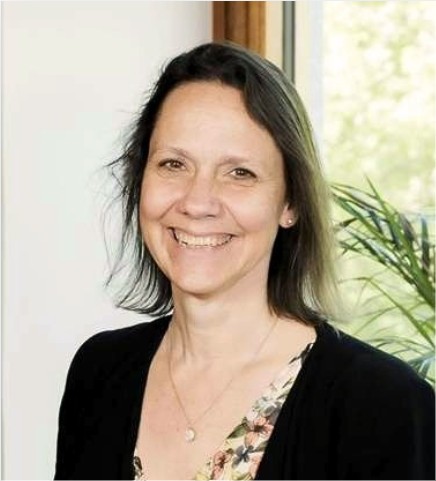
Senior Policy Advisor – Water Resilience Tracker, Alliance for Global Water Adaptation (AGWA)
Chair, Community of Women in Water (CWiW)
“We can only give water the priority it deserves if we engage those beyond the sector. By speaking their language and showing its value, we can turn them into champions for water and create the impact we urgently need.”
This interview was conducted by Salma Bessadok, on the CWiW Member Spotlight team.
An Unexpected Path: Dani Gaillard-Picher’s Journey into Water
Dani Gaillard-Picher’s journey into the water sector unfolded in a way she hadn’t anticipated. With an academic background in French literature and psychology, and early professional experience in sales, marketing and communications within the private sporting goods sector, her career initially followed a completely different trajectory.
After relocating from the United States to France, she spent several years building her professional experience. However, seeking greater purpose and fulfillment, she made a pivotal career shift when she joined the World Water Council as an executive assistant. What began as an opportunity quickly transformed into a calling.
Immersed in the global water community, Dani absorbed the complexity and urgency of water-related challenges. Over time, her curiosity deepened into commitment. While balancing work and raising two daughters, she pursued a Master’s degree in Global Development Management, strengthening her ability to engage more directly with global water issues. This turning point marked the deepening of a purposeful career dedicated to water sustainability and policy.
From Global Policy to Local Impact: Dani’s Work in Water Resilience
Today, Dani serves as a Senior Policy Advisor for the Water Resilience Tracker at the Alliance for Global Water Adaptation (AGWA). The tracker is a global tool used across multiple countries to strengthen water and climate resilience.
Her work focuses on bridging the gap between policy design and real-world implementation, a persistent challenge in the sector. By examining national frameworks and how they translate into action at local level, she helps ensure that policies are not only well formulated but also effective on the ground.
In this role, she connects global perspectives with local realities, drawing lessons across countries and helping turn them into scalable approaches that support climate and development priorities. At the core of her work, is a central question: how can policy truly drive meaningful change where it is most needed?
For Dani, impact depends on systems thinking, aligning governance, enabling environments, and local action to make water resilience both practical and achievable.
Building a Community: Dani’s Role within CWiW
As one of the early members of the Community of Women in Water (CWiW), Dani has witnessed its evolution from an emerging network into a recognized and growing global platform.
Recently nominated as Chair, she embraces this role with a strong sense of responsibility and optimism. She credits the vision and leadership behind the Community for creating a dynamic and supportive space that continues to grow in impact.
For Dani, CWiW represents more than a professional network, it is a space of connection, trust, and shared experience. Particularly during periods of remote work, the Community has served as a vital support system where members can exchange ideas, share challenges, and simply feel heard.
Redefining Leadership: Empowering Others to Lead
Dani’s vision of leadership challenges traditional notions. For her, leadership is not about visibility or authority, it is about enabling others.
She believes that true leadership lies in creating environments where people, especially younger professionals, can develop their capacities and take meaningful action. It is demonstrated through everyday choices, interactions, and the ability to model values rather than simply promote them.
Influenced by collaborative leadership initiatives such as Grow3Leaders, Dani embraces a collective approach, where leadership emerges through shared action, trust, and learning.
The Sector’s Greatest Challenge: Rethinking Finance and Flow
When reflecting on the biggest challenges facing the water sector, Dani points to a critical issue: not the lack of funding, but the misalignment of financial flows.
While large-scale investments exist, they often fail to reach the “last mile”, the communities and local systems where impact is most needed. This disconnect limits the effectiveness of solutions and slows progress.
Addressing this challenge requires breaking silos and fostering interdisciplinary collaboration. Dani emphasizes that water cannot be managed in isolation: it intersects with climate, energy, agriculture, and social systems. Holistic, cross-sector approaches are essential to designing solutions that truly work.
Innovation Beyond Technology: Shifting Mindsets
Dani acknowledges the rapid advancement of technological innovation in the water sector, particularly with tools such as AI and remote sensing. However, she highlights a less visible but equally critical gap: innovation in processes, governance, and mindsets.
She believes that resistance to change and reliance on traditional approaches often hold the sector back. To achieve global water and climate goals, there must be greater emphasis on enabling environments that support new ways of thinking and working.
Advice for the Next Generation: Relationships Matter
For young professionals entering the water sector, Dani emphasizes the importance of clarity and connection.
Water is a vast and interdisciplinary field, understanding where you want to contribute is essential. However, beyond technical expertise, she highlights one key factor for success: relationships.
Building trust, engaging with others openly, and not being afraid to seek advice are fundamental. Strong networks can unlock opportunities, foster collaboration, and ultimately drive impact.